Leading Organisation
Department of Architecture (DiARC) of the University of Naples Federico II
Duration
6 months, starting the 1st of February 2026
Location
Naples (Bagnoli–Coroglio), Italy
Located along Naples’ western coastline, MEDSAIL unfolds between the historic city centre and the post-industrial area of Bagnoli–Coroglio, a Site of National Interest marked by decades of industrial pollution and social marginalisation. The project responds to this complex landscape by positioning polluted coastal spaces as sites for collective reflection, artistic expression and civic dialogue.
Led by the Department of Architecture (DiARC) of the University of Naples Federico II, in collaboration with the curatorial collective Collettivo Zero APS, MEDSAIL brings together residents, artists, scientists and civic actors to explore how environmental contamination intersects with memory, identity and access to the sea.
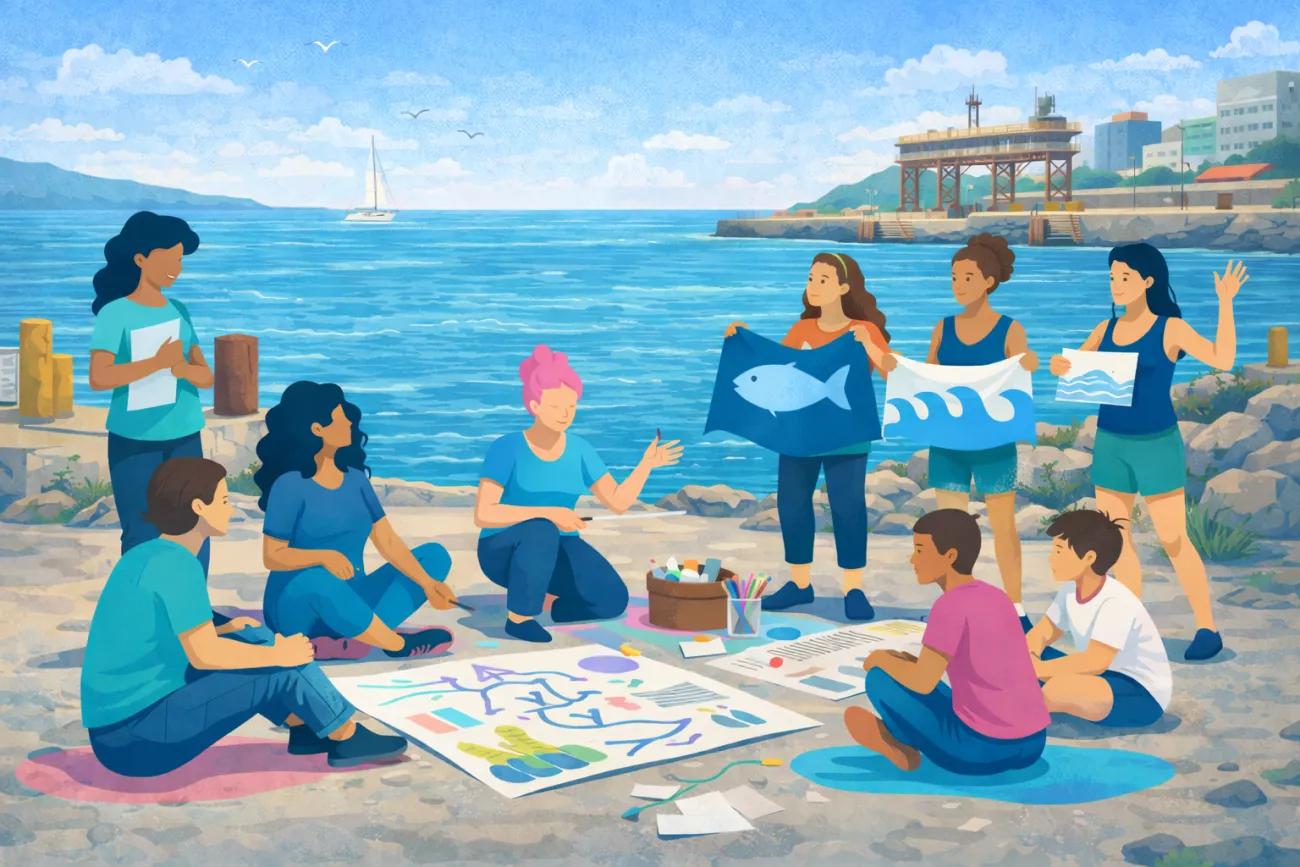
The project combines participatory art, citizen science and urban ecology. Through workshops, artistic residencies and co-design sessions, participants engage with environmental data, lived experiences and local histories. Two artistic processes anchor the work: one involving young people from the Nisida juvenile penitentiary, and another engaging women from Bagnoli’s former industrial community, transforming personal narratives into collective performances and installations.
The Luise Pier serves as the hosting harbour for the PartArt4OW Sailing Lab, acting as a bridge between city, sea and community. The project culminates in a public festival featuring exhibitions, performances and dialogues, with all outputs shared openly.
Expected Outcomes
By the end of the project, MEDSAIL is expected to deliver the following outcomes:
- Increased awareness of water pollution and industrial legacies along Naples’ western coastline through experiential and participatory activities.
- Active engagement of residents from historically excluded communities in artistic and scientific processes related to coastal environments.
- Co-created artworks, performances and installations translating environmental data and lived experience into accessible, public forms.
- Strengthened dialogue between residents, artists, scientists and civic institutions around pollution, memory and access to the sea.
- Enhanced skills among participants in co-creation, environmental observation and collective storytelling.
- Openly shared documentation, methodologies and artistic outputs accessible to wider audiences.
Expected Impacts
Short-term impacts
- Greater civic participation and sense of agency among communities affected by environmental contamination.
- Increased visibility of polluted coastal spaces as shared social and cultural territories rather than marginal or inaccessible zones.
- Strengthened connections between the city, the harbour and coastal communities through the Sailing Lab and public festival.
Medium- to long-term impacts
- Contribution to more inclusive and participatory coastal regeneration processes in Bagnoli–Coroglio and similar post-industrial areas.
- Integration of participatory art methodologies into urban planning, environmental governance and community engagement practices.
- Enrichment of Mediterranean-wide knowledge exchange on pollution, coastal transformation and social inclusion through PartArt4OW networks.
- Long-lasting reframing of narratives of exclusion toward collective care, memory and regeneration of polluted coastal territories.
Main Investigators and Key Leads
DiARC – University of Naples Federico II – Scientific and institutional lead
Collettivo Zero APS – Curatorial and participatory art coordination
Maria Giovanna Abbate – Artist
Teresa Antignani – Artist