Sunk Costs: The Saga of the Felicity Ace
Leading Organisation
Sunk Costs Collective
Duration
6 months
Location
The Azores, Portugal (Faial and São Miguel)
The Wreck
On 16 February 2022, a fire broke out aboard the Felicity Ace, a 200-meter car carrier crossing from Emden to Rhode Island with nearly 4,000 vehicles on board. The crew of 22 was lifted off. The ship kept burning. Lithium-ion batteries in the electric vehicles were widely suspected of feeding a fire that resisted extinguishing for almost two weeks. On 1 March, under tow, the Felicity Ace rolled and sank about 400 kilometres off the Azores, in water roughly three kilometres deep.
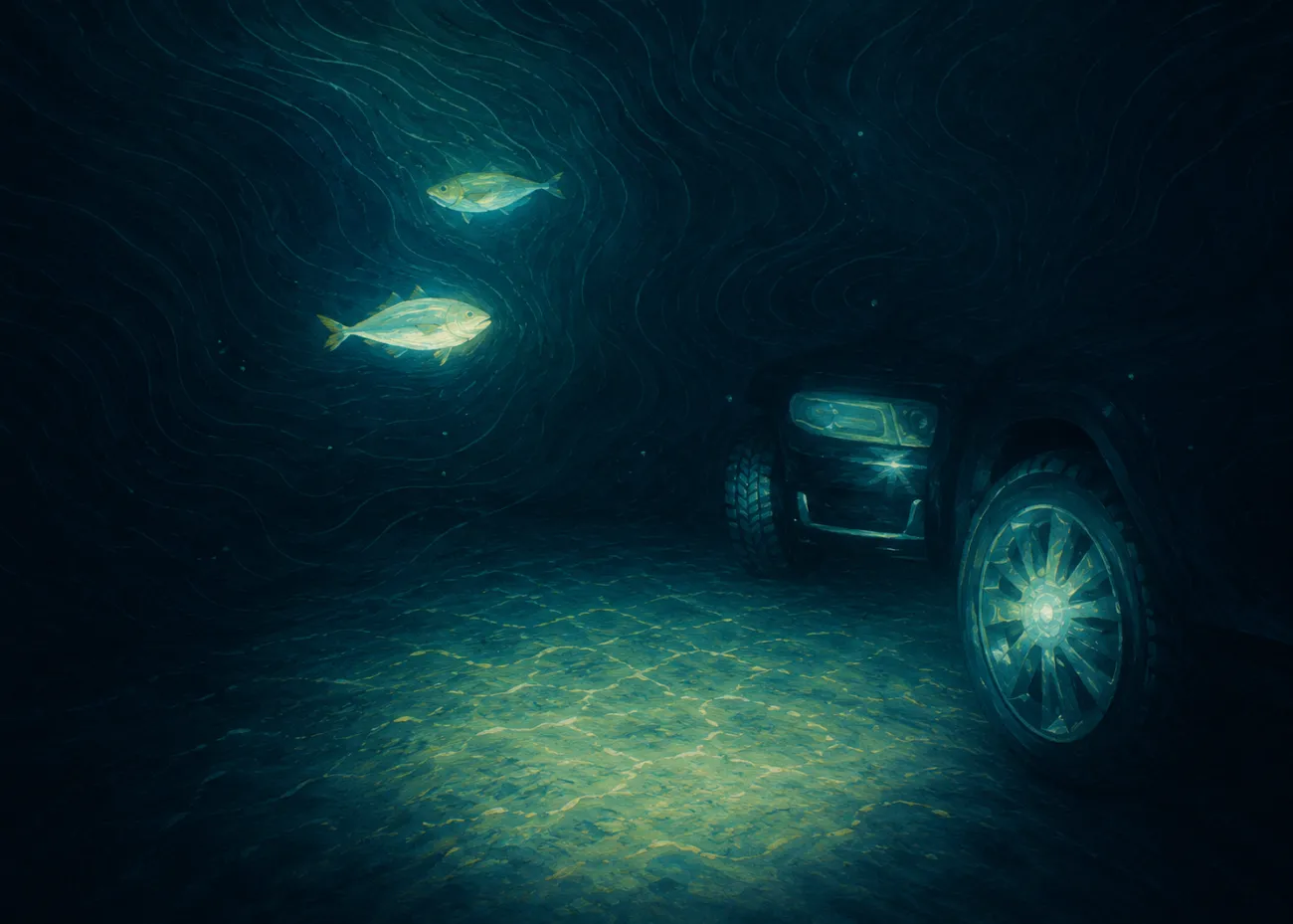
It is still there. A former floating carpark, now a drowned showroom in permanent darkness, full of steel, plastics, fuels, hydraulic fluids, tyres, upholstery, and thousands of lithium batteries slowly leaching their minerals into the cold. The same lithium, cobalt, and nickel the deep seabed is now being surveyed for, returned to it by accident.
The financial part of the disaster moved fast. Cargo values were totalled, claims were filed, and insurers pursued recovery through the courts. The ecological part has no comparable resolution. It unfolds at depths beyond easy observation, on timescales longer than any claim, in waters that Azorean communities fish, monitor, and live beside. The saga begins in this gap. What happens when financial loss can be measured and ecological loss cannot? Who is responsible for consequences that may take decades to appear, if they are ever attributed at all? What would it cost to curtail, abandon or necessarily transform these elaborate menageries of late industrialism?
The Azores as a Point of View
The Azores sit inside Atlantic routes used by cargo ships, submarine cables, migrating species, research vessels, and human travel. They are hubs used for mercantile invention, geopolitical conflict and racial-capitalist expansion. The decisions that govern the ships passing the Azores, their routing, insurance, liability, and environmental monitoring, are made elsewhere, in logistics offices and data centres, very far from any coastline.
For our saga, the islands work as a vantage point, a place from which planetary systems can be witnessed at close range, by people who have a closer experience of their consequences. The continuing saga is to be shaped by the communities, landscapes, maritime practices, and histories of the Azores, and by what local participants decide is worth asking in the first place.
A Disaster with Continuing Afterlives
The saga of the Felicity Ace did not end when it sank. It persists in insurance archives, legal categories and cases, monitoring data, public memory, and the material fact of the ship and its cargo on the seabed.
The research will not claim that every change in these waters traces back to the wreck. Ecological consequences move slowly, travel far, and blur into other environmental changes. That blur is exactly what interests us: how evidence about the deep sea gets produced, who contests it, what gets acted on when the evidence is incomplete or delayed or disputed, and who gets to say when nothing is wrong.
What Can Be Salvaged?
Not everything can be recovered from a wreck. Cargo is often abandoned long before questions are. Sunk Costs approaches the Felicity Ace as an ongoing work of salvage, recovering stories, evidence, relationships, responsibilities, and ways of knowing rather than vehicles. Over six months, the project undertakes four intertwined salvage operations.
Listening: It begins with conversations and sensory inquiry. Shared experiences of fishing, shipping, environmental change, maritime work, risk, and island life sit alongside underwater recordings, scientific observations, historical materials, insurance documents, and accounts of the disaster itself. A fisher's observation, a scientific dataset, an insurance assessment, and a personal memory each reveal something different. Each carries a different kind of authority and uncertainty, and the project has no interest in collapsing them into a single authoritative story.
Mapping: We trace the relationships surrounding the wreck: shipping routes, supply chains, ports, fishing grounds, insurance systems, monitoring technologies, marine organisms, public institutions, island economies, and the distant places connected through the movement of goods. Mapping together reveals where information exists, where it is missing, and how responsibility moves around. The maps remain incomplete and open to revision, gaps included.
Reimagining: What we salvage is translated into transmedia pieces and experiential prototypes: sound, moving image, maps, objects, digital interaction, storytelling, role-play, facilitated situations. These are instruments for finding things out. A prototype might begin with listening underwater, or with a meal, a route, a held breath, and then connect that experience to insurance, shipping, monitoring, labour, institutional responsibility. Participants can alter the rules, introduce missing actors, question what counts as evidence, and redistribute the costs.
Gathering: The developing research and prototypes support encounters among communities, specialists, institutions, and cultural audiences, taking the form of gatherings, demonstrations, participatory scenarios, installations, shared meals, walks, and other activities in the field. Participants might identify relationships missing from an institutional map, or challenge how uncertainty is represented, or reject the choices a scenario offers and propose something else entirely. The project does not arrive with a solution to present. If you fish these waters, work at sea or in the ports, study the ocean, or simply live beside it, there is a place in this saga for what you know.
Three Witnesses
A wreck never tells its story all at once. It leaves fragments scattered through bodies, landscapes, institutions, and memories. To understand the Felicity Ace means learning to read its traces across different registers of experience. No single perspective is enough. Together they become a form of salvage, recovering what happened along with what the wreck continues to warn us about.
Bodily: The body is always first, and last, witness. The wreck lies beyond ordinary human reach. It can only be approached sideways: through sound, breath, pressure, appetite, fatigue, movement, and the many bodies that continue to inhabit its waters. Human bodies, marine organisms, coastlines, ships, currents, weather, and bodies of water all become witnesses to the event. Beginning here reminds us that the apparent frictionlessness of global logistics conceals weight, distance, exhaustion, exposure, dependence, and risk. Every seamless supply chain is carried by vulnerable bodies.
Territorial: A second witness is the landscape. Ports, coastlines, shipping routes, fishing grounds, monitoring stations, volcanic islands, and submarine infrastructures all preserve fragments of the story. The Azores become a vantage point from which centuries of trade, colonial expansion, migration, scientific observation, communication, and salvage can be read together, as well as the location of the wreck. Here the project asks where risks accumulate, where benefits flow, and how island communities inherit the consequences of decisions made far beyond their shores.
Planetary: The third witness is the system itself. Insurance, liability, logistics, environmental governance, finance, and deep-ocean monitoring all determine how disasters become legible, or disappear from view. These infrastructures decide what counts as evidence, who is authorised to speak, which losses are measurable, and when responsibility is considered complete. Yet the wreck remains, resisting closure. Its ecological afterlives unfold over decades, while financial accounts close within months. The project lingers within this unresolved space, where uncertainty itself becomes a political condition.
Learning with the Ocean
Sunk Costs necessarily takes place in ports and fishing grounds, on boats and coastlines, in volcanic pools, thermal springs, kitchens, and the water itself. We reconnect these spaces to the boardrooms and spreadsheets that elicit and trace the saga of the Felicity Ace, and other wrecks. Swimming, diving, listening underwater, holding one's breath, fishing, cooking, and sharing meals become ways of paying attention, of witnessing and salvaging. They reveal the weight, friction, labour, maintenance, vulnerability, and care that global logistics works so hard to render invisible. None of this is immersion for its own sake. They are ways of learning with the ocean through bodies, relationships, effort, pleasure, discomfort, and attention. Every activity is developed with local partners and participants, responding to place, weather, ecological conditions, and local, situated knowledges.
Reading the Wreck, Salvaging Warnings
The Felicity Ace is treated as a rupture in the smooth story that contemporary capitalism tells about itself, more than a maritime accident. For a brief moment, the hidden infrastructures of global trade might rise to the surface. Shipping, insurance, finance, logistics, environmental monitoring, and responsibility. The wreck is still there, still HERE, continuing to act long after the headlines, court cases, and insurance claims have passed. Sunk Costs approaches it as a witness rather than an object: a place from which to ask how disasters become known, who gets to produce evidence, which losses are counted, and which are allowed to disappear. Rather than recovering what was lost, the project salvages the warnings, and futures, the wreck continues to offer.
Team and Partnerships
Sunk Costs is developed by:
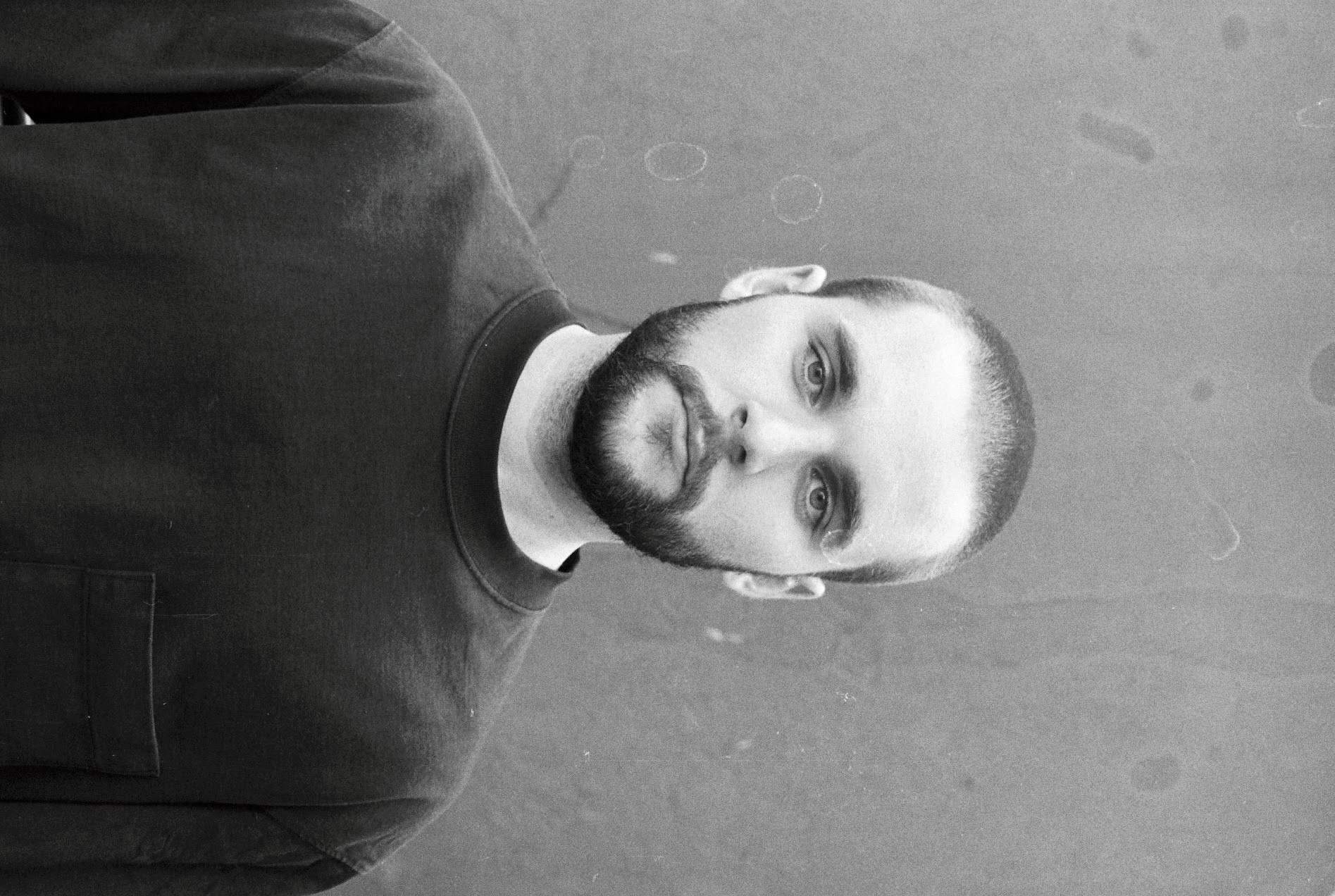 Célestin Meunier - Célestin Meunier (he/him) is a media artist and researcher working with creative technologies. Célestin is from Lyon but is based in Berlin.
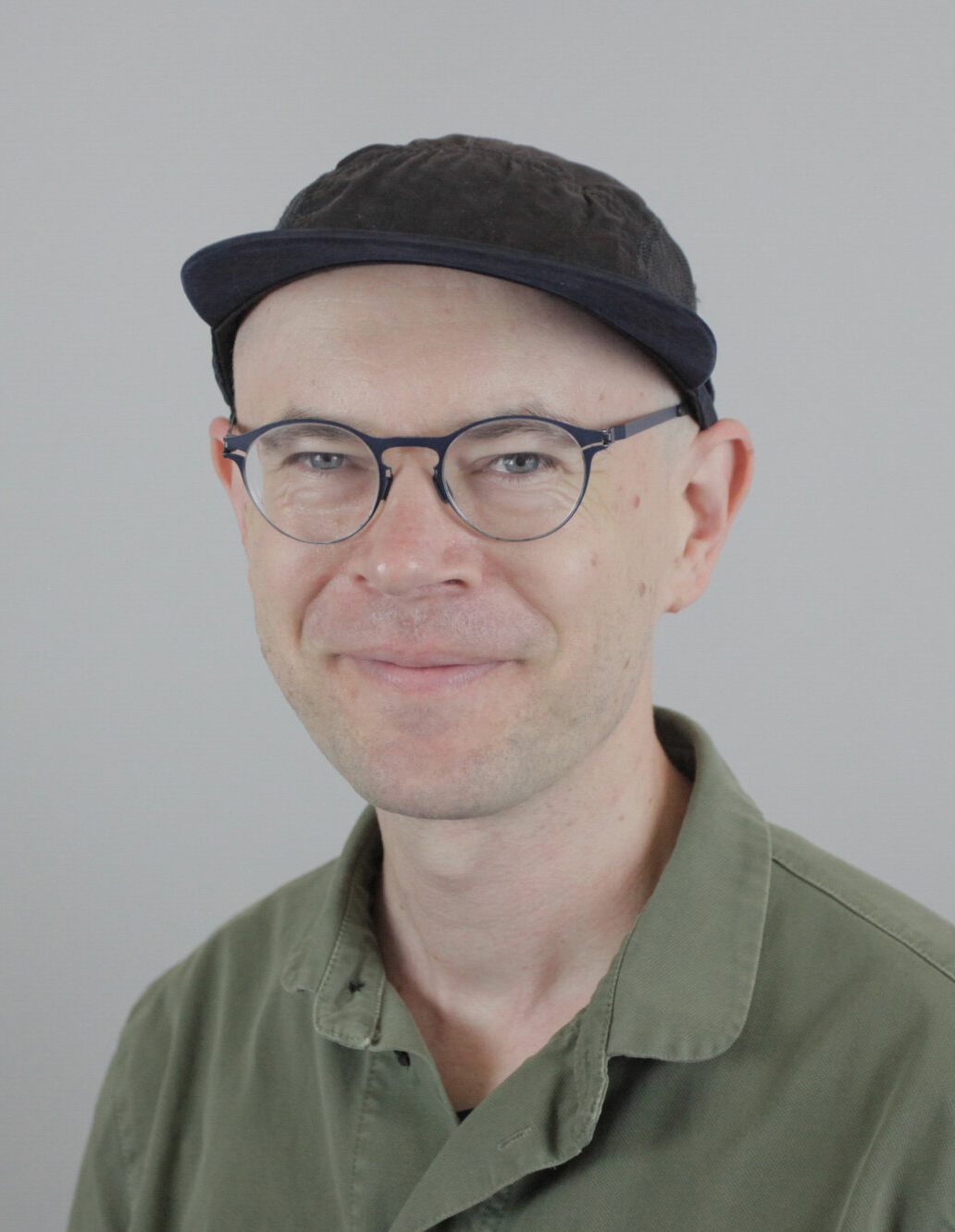 Chris Woebken - Chris Woebken Studio is a design futures research practice whose work explores how speculative methods, public participation and design shape collective understandings of possible futures. Working across exhibitions, participatory research, public programs and special commissions, the studio develops collaborative projects that invite communities to co-construct and inhabit speculative scenarios.
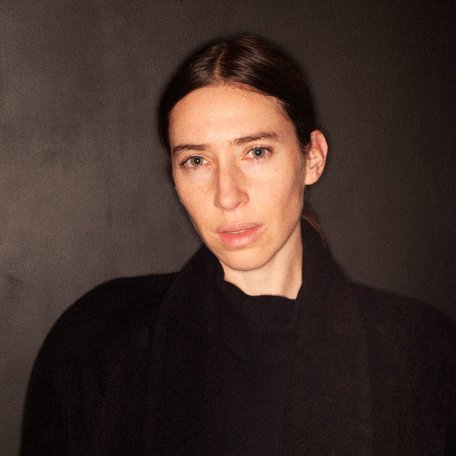 Delfina Fantini van Ditmar - Delfina holds a BA in Biology and completed her PhD at the Royal College of Art in the School of Design (SoD). Driven by her interest in ecological thinking, reflective practices and inter-relations as a systemic response to the environmental collapse, Delfina’s critical practice examines material ethics of care and the necessary paradigm shift in design.
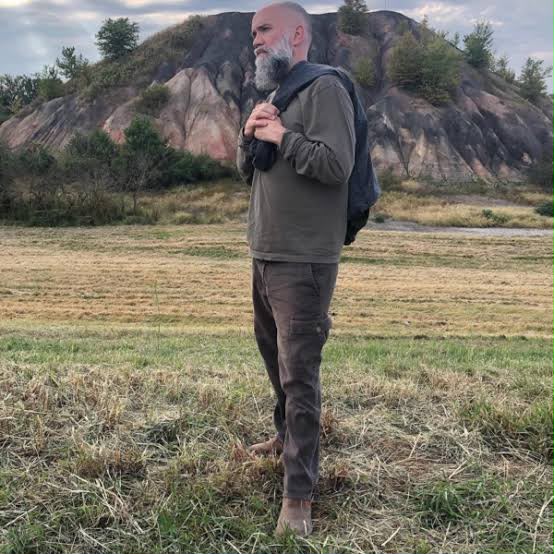 Jamie Allen - Jamie Allen is a Canadian artist, researcher and organizer whose work explores the resonances between metabolisms, ecologies, technologies, infrastructures and institutions. Working across installation, publishing, performance, media and participatory research, he develops collaborative projects that investigate how material, technical and social systems shape collective life and our relationships with places, landscapes and one another.
Matthew Lutz - Matthew J. Lutz is a behavioral ecologist, architect, and interdisciplinary researcher whose work explores how collective behavior shapes biological, human, and artificial systems. Working across ecology, architecture, computation, and artistic research, he develops projects that investigate collective intelligence, self-organization, and the reciprocal relationships among organisms, technologies, and environments.
In partnership with Anda&Fala / Walk&Talk local cultural partners and blueOASIS marine monitoring and underwater acoustics. Maritime research and input from Philip Kreuzmann. Institutional and community resonance and research support provided by Anthropocene Commons, metaLAB (at) Berlin, Basel & Harvard, amongst many other friends.